Can you change the locks in a rented HDB flat or condo in Singapore
By Sam Lee · Updated 2026-06-26
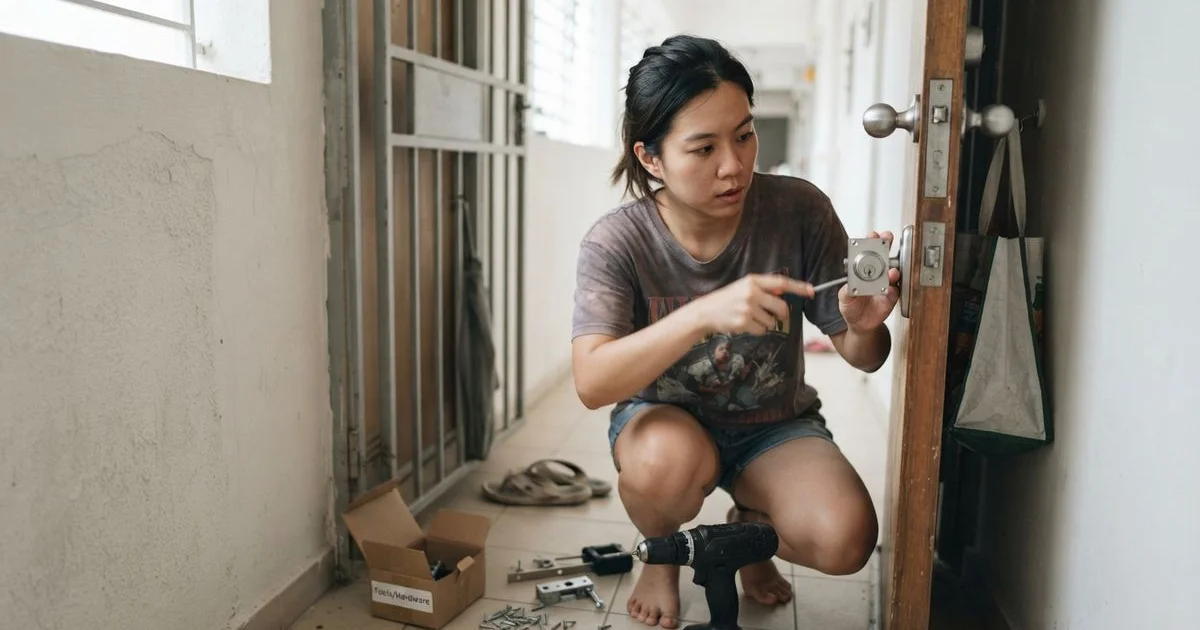
This is general information about common tenancy practice in Singapore, not legal advice. Specific rights and obligations depend on your individual tenancy agreement, so review it directly or consult a professional for anything you’re unsure about.
Why this comes up more than you’d expect
Moving into a rental in Singapore, whether an HDB flat or a condo unit, often comes with a nagging thought: how many people actually hold a key to this place. Previous tenants, the agent, sometimes even the landlord’s family. It’s a reasonable concern, but tenants don’t have unrestricted freedom to just swap the lock the way an owner-occupier would.
What tenancy agreements typically say
Most standard tenancy agreements in Singapore treat the lock as a fixture of the property, meaning changes to it generally require the landlord’s consent, similar to other alterations like drilling into walls or repainting. This isn’t usually about control for its own sake, it’s because the landlord needs to retain access for approved maintenance visits, emergencies, or eventually handing the unit to a new tenant.
That said, raising the concern directly with your landlord is usually a straightforward conversation, not a confrontation. Explaining that you’d like to rekey the lock for peace of mind, and offering to provide a copy of the new key, is a request most landlords are comfortable with, since it costs them nothing and resolves a legitimate worry.
The more common friction point is timing and communication rather than the request itself. A landlord who hears about a lock change after the fact, from a maintenance visit that suddenly doesn’t work, is far more likely to be annoyed than one who agreed to it upfront in writing. A five-minute message before booking the locksmith avoids that entirely.
| Scenario | Typical approach |
|---|---|
| Standard move-in, no specific concern | Usually not necessary, but reasonable to request if you want peace of mind |
| Previous tenant or agent held multiple copies | Reasonable request, most landlords agree |
| Landlord unresponsive to the request | Review your tenancy agreement’s dispute process before acting unilaterally |
| End of tenancy | Revert to original lock, or formally hand over new keys per the agreement |
What to do if you want a rekey
Start with a written request to your landlord or the managing agent, stating the reason and confirming you’ll provide a copy of the new key or code. Keep this in writing, an email or text thread, rather than a verbal agreement only, so there’s a record if any question comes up later. Note the date the change happens too, since that’s useful information if a dispute ever comes up around who had access at a particular point in the tenancy.

Once approved, a locksmith can usually rekey a standard lock, changing the internal pins so old keys stop working without needing to replace the entire lock body, which keeps the cost down and preserves the property’s existing hardware. If you’re switching to a digital lock instead, confirm that’s covered by the same approval, since it’s a bigger change than a simple rekey and some landlords treat it differently.
For condo units specifically, there’s sometimes an added layer: the MCST’s house rules may also touch on what’s visible from a common corridor, separate from your landlord’s own approval. It’s worth checking both, your tenancy agreement and, if relevant, the condo’s house rules, rather than assuming landlord approval alone covers everything.
At the end of the tenancy
Check your agreement’s terms on returning the property in its original condition. Most require reverting any lock change made during the tenancy, or formally documenting the new keys as part of the handover to the next occupant. Sorting this out before your final inspection, rather than during it, avoids an awkward conversation about the security deposit.
If you’re unsure what your specific agreement allows, reviewing it directly or asking the agent for clarification in writing is the safest path. It’s a small step early in a tenancy that can save a genuinely awkward conversation, or a deposit dispute, much later on.
For finding a locksmith to do the actual rekey once you’ve got approval, see our full directory homepage and our scoring methodology for how we rank providers.
FAQ
- Can I change the lock in my rented flat without asking my landlord?
- Most tenancy agreements require landlord consent before altering fixtures, and a lock is generally treated as a fixture. Changing it without asking is a common source of disputes, even if your intention was purely about your own security.
- What if I've lost trust in a previous tenant's or agent's key copies?
- This is a reasonable, common concern and worth raising directly with your landlord. Most landlords will agree to a rekey, or allow you to arrange one, once you explain the reason, since it's a low-cost fix for a legitimate worry.
- Do I need to give the landlord a copy of the new key?
- Generally yes, unless your agreement says otherwise. Landlords typically need access for approved maintenance or emergencies, so keeping them locked out entirely usually isn't consistent with a standard tenancy agreement.
- What happens to the lock when my tenancy ends?
- Check your agreement, but most require the property to be returned in its original condition, meaning any lock changed during the tenancy should generally be reverted, or the landlord informed and new keys formally handed over.