How key cutting actually works and how long it takes in Singapore
By Sam Lee · Updated 2026-06-23

What actually happens at the counter
Key cutting looks simple from the customer side: hand over a key, wait a few minutes, get a copy back. Behind the counter, a competent shop is doing more than tracing an outline. The technician checks the key type first: a standard pin tumbler key, a restricted keyway that needs authorisation, or a transponder key that involves programming a chip rather than just cutting metal.
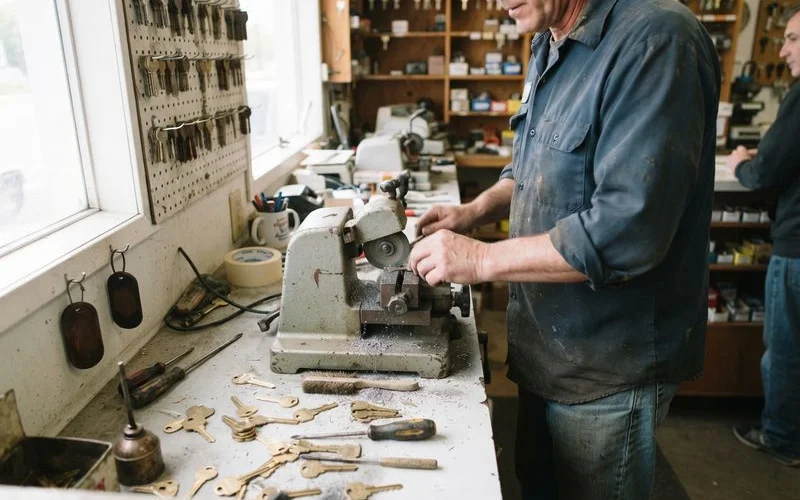
For a standard house key, the process is genuinely quick. The original is clamped into a cutting machine alongside a matching blank, and the machine (or an experienced hand on older manual machines) traces the cuts from the original onto the blank. A careful shop deburrs the edges afterward, since a rough cut can feel gritty in the lock even if the depth is correct.
Blank selection matters more than most customers realise. Blanks vary by brand, groove profile, and metal quality, and a shop with a wide, well-stocked selection is more likely to have an exact match on hand rather than a close-enough substitute. A close-enough blank can still turn in the lock, but it’s more prone to sticking over time than a proper matching blank cut cleanly the first time.
Why timing varies so much
A basic house key copy is usually a few dollars and takes only a couple of minutes. Higher-security or restricted keyways cost more, sometimes considerably more, because the blanks themselves are pricier and less common, and cutting them correctly often takes more care. Car transponder keys and remotes are the most involved: cutting the metal is only part of the job, the chip inside also needs to be programmed to the vehicle, which is a separate process using dedicated equipment.
| Key type | Typical time | What makes it take longer |
|---|---|---|
| Standard house key | A few minutes | Nothing unusual, straightforward cut |
| Restricted keyway | Longer, plus authorisation check | Verifying you’re allowed to have a copy made |
| Worn or old key | Longer | Extra care to avoid copying wear inaccurately |
| Car transponder key | Longest | Chip programming after the physical cut |
| Motorcycle or unusual profile | Varies, sometimes declined | Not every shop carries the right blanks or machine |
When a shop says no, or takes longer than expected
Restricted keyways exist specifically to prevent casual duplication, so a shop asking for proof of authorisation before cutting one isn’t being difficult, it’s the system working as intended. Similarly, some smart proximity fobs and older or unusual key profiles need specialised laser-cutting equipment that not every shop has on hand, which is why one shop might decline a job that another handles without issue.
A worn original key is a less obvious complication. If the key you’re duplicating from has years of wear on the cuts, the copy will faithfully reproduce that wear, which can mean a duplicate that doesn’t turn as smoothly as the lock deserves. If you know your original is old and worn, it’s worth mentioning, since a good shop may suggest cutting from a cleaner reference key if one exists, or adjusting slightly during the cut.
Getting a key that actually works first try
Reviews across the directory frequently mention fast turnaround as a strength in this category, sometimes under thirty minutes for a full visit, but the businesses that stand out combine that speed with testing the key before handing it over. Ask for that test if it isn’t offered automatically. A key that looks correctly cut can still bind in the actual lock due to small variances between blanks and originals, and catching that at the counter is far more convenient than discovering it at your own front door.
If you’re duplicating several keys at once, house key, gate key, mailbox key, it’s worth having them all cut in the same visit rather than trickling back over separate trips. Most shops don’t charge extra for handling a batch together, and it saves you the repeat trip.
You can browse our list of key cutting and duplication providers in Singapore, and check our scoring methodology for how we weigh speed, accuracy, and customer feedback. See the homepage for the rest of the directory.
FAQ
- Why does key cutting take longer for some keys than others?
- A standard house key on a common blank can be cut in a couple of minutes. Restricted keyways, worn originals, or car keys with a chip to program all take longer because they need more careful handling or extra steps.
- Can any key be duplicated from an existing copy, or does it need the original?
- Most standard keys can be duplicated from a good copy, not just the very first original. A heavily worn key is riskier to copy from, since the shop is duplicating whatever wear is already there, which can produce a key that doesn't turn smoothly.
- Why did one shop refuse to cut my key?
- Restricted keyways need proof of authorisation before a shop will cut them, since they're designed specifically to prevent unauthorised copying. Some smart proximity fobs or unusual old keys also need specialised equipment not every shop carries.
- Should I test a new key before leaving the shop?
- Yes. A good shop will test the cut key in your lock, or at least in a matching test cylinder, before you leave. If that's not offered, ask, since a key that looks right can still bind or stick in the actual lock.